
Swipe across to follow the project →
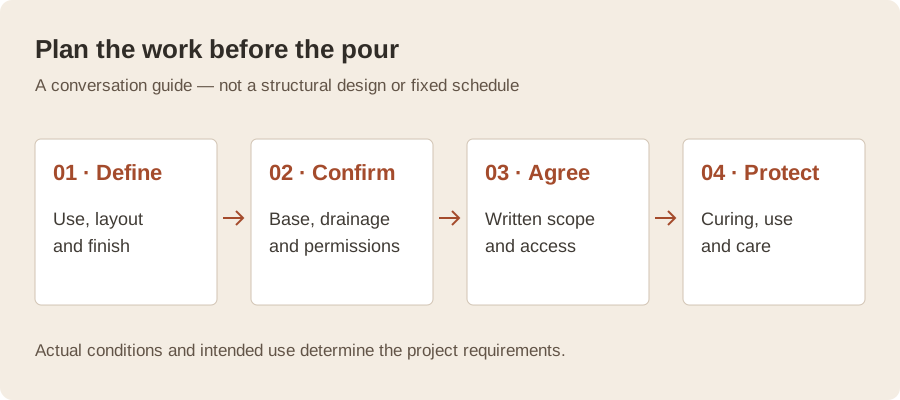
What is checked before concrete work is planned?
Start with how the space will be used: vehicles, foot traffic, furniture, gates and downspouts. Note the approximate area, existing surface condition, where water goes, how equipment reaches the work, and whether removal is needed.
Those details help a contractor match slab and finish to the load and use. They also flag conditions such as soft support, movement or poor drainage that need qualified assessment before anyone promises a repair or replacement.
What should a written scope include?
A written scope is the clearest way to compare concrete bids. It should state:
- Preparation steps and how the base will be handled
- Removal and disposal of existing concrete, if needed
- Design requirements, including shape, joints and finish
- Curing method and project-specific protection schedule
- Restoration, cleanup and any exclusions
- How changes will be handled before work begins
How does the work move from ground prep to finish?
The sequence generally follows this order:
- Assess ground, drainage and access before excavation.
- Prepare and compact the base so the slab has uniform support.
- Place concrete at the agreed thickness and layout.
- Finish the surface for its use; broom finish adds texture, while decorative texture changes appearance.
- Cure the slab so moisture and temperature are managed while it develops strength.
What should be reviewed at completion?
Use the written scope as your checklist.
- Compare preparation, joints and finish with the agreed scope.
- Confirm curing and protection instructions for your project.
- Check restoration and cleanup items, plus any exclusions.
- Ask when walking, vehicle access and sealer application can occur.
- Request the installer's project-specific protection and use schedule.

A FEW MORE ANSWERS
Questions before you get started
Can I drive on new concrete right away?
No fixed driving interval applies to every project. Walking access, vehicle access and sealer application are separate milestones; ask your installer for the project-specific schedule.
Does a written scope guarantee no cracks?
No. Concrete can crack as conditions change. Uniform support, planned joints, good placement and curing help manage risk, but no method eliminates it.