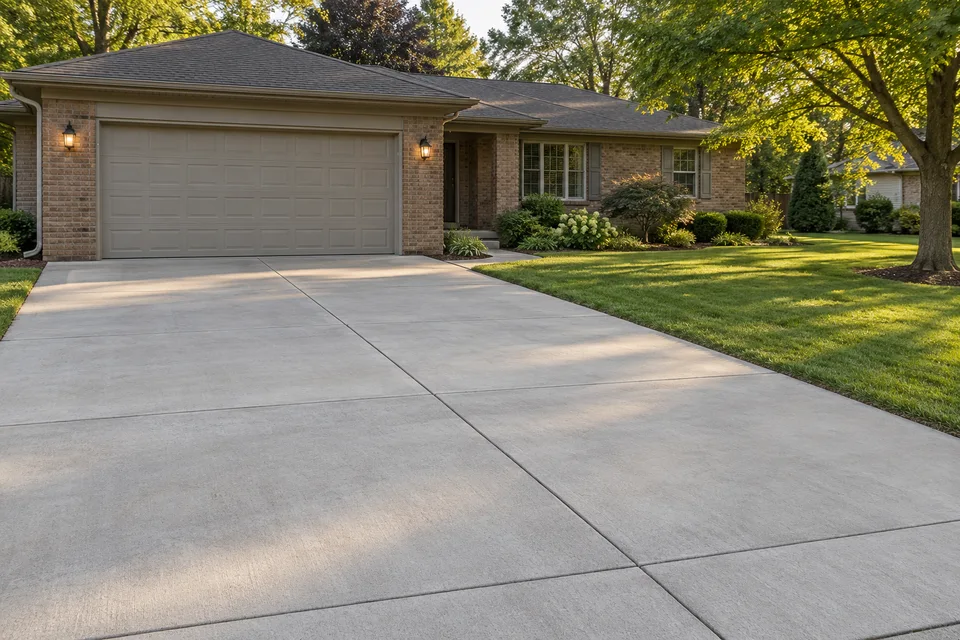
How should repair, resurfacing or replacement be decided?
Start with the existing slab and the cause of the damage. The condition of the concrete, its support, and any movement or water problems determine whether a repair or resurfacing can be suitable.
What concrete changes are worth assessing?
- Changes in level, such as a slab that has settled or tilted
- Drainage problems, including water that pools or runs toward a building
- Movement, opening gaps or repeated cracking in the same area
- Repeated repairs that have not stopped the problem from returning
- Surface scaling, flaking or a rough, deteriorating top layer
- Crack patterns that should be assessed rather than judged all alike
Find the cause before choosing a repair
A surface patch or overlay may be unsuitable if movement, support or drainage remains unresolved. Ask what assessment supports the recommendation.
Request that the condition findings, proposed repair method and exclusions be put in writing. That makes it easier to compare what each option actually addresses.
If replacement is the likely direction
If replacement is likely, compare demolition, base and drainage correction, access during work, and restoration.
A useful written scope should identify preparation, removal and disposal, design requirements, joints, finish, curing, restoration and exclusions. Compare the stated scope rather than price alone.